Engine paint and OEM colours for classic cars
Engine colours, measured.
The OEM colour your engine left the factory in, the engine paint on sale now that comes closest to it, and how to put it on properly.
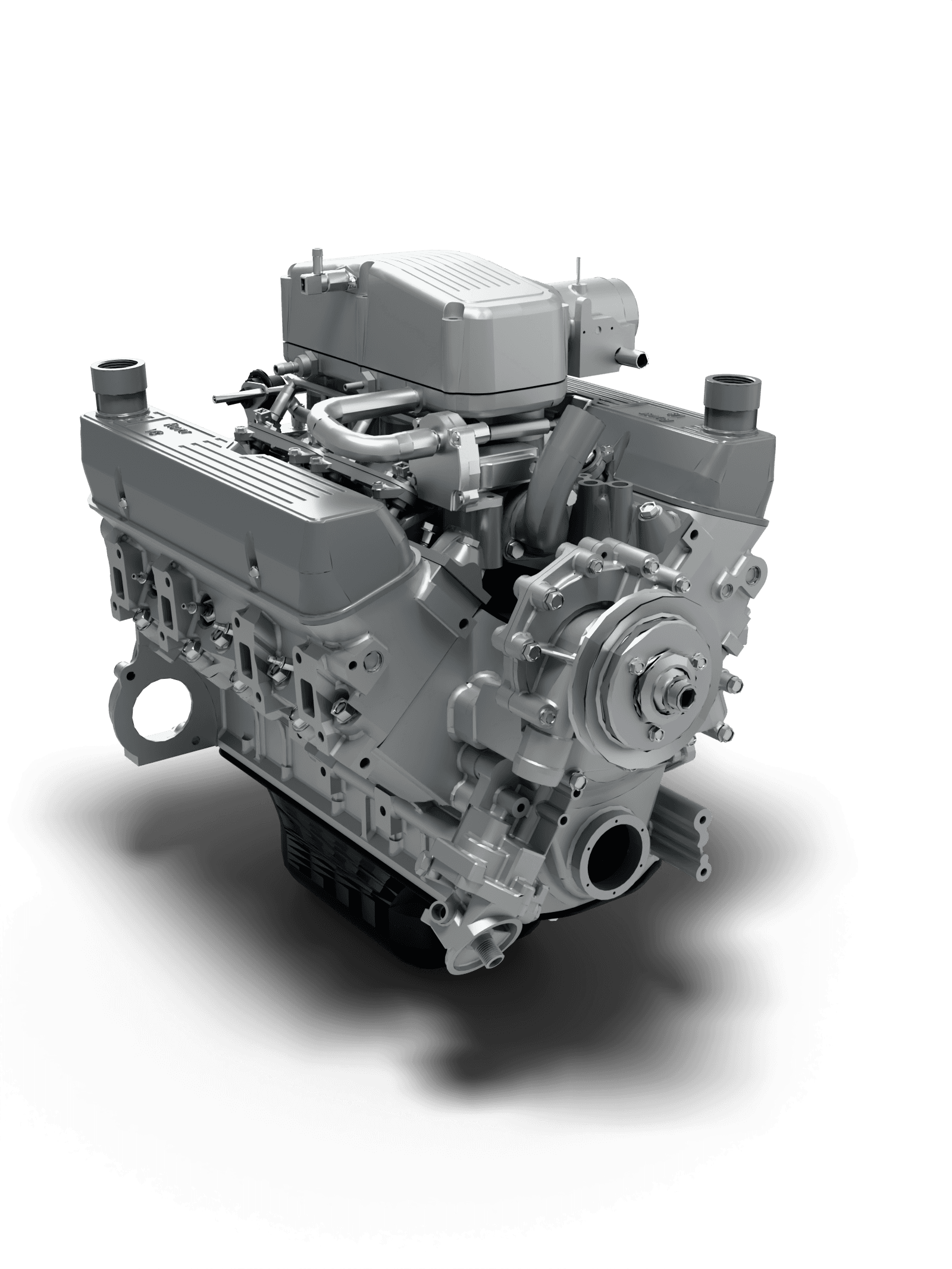
Rover V8, measured part by part. Its covers and manifold in the record's grey, then in colours you could choose. Approximate until measured.
Model: Dave Rutland, GrabCAD.
- [01]What was the OEM colour for this engine?Look it up in the OEM colour reference
- [02]What should I buy now to match it, and where?Compare the paints in the shop
- [03]How do I prep and apply it properly?Read the guides
OEM colour reference
50 published records
Body colours for classic cars are compiled everywhere. Engine colours are compiled nowhere outside the United States: the answers sit in forum threads that never conclude and in retailer product names that cite no source. This reference compiles them, one record per engine family, market, span of years and part, because colour followed the engine and the era rather than the car. Look a colour up by engine, year or colour, or start from the car.
- BMC
A-series, B-series, C-series
- Ford (UK)
Essex V4 and V6, Kent, Pinto, Sidevalve
- Jaguar
AJ6, V12, XK six
- Rover
P6 four, V8
- Triumph
Standard SC small four, Standard wet-liner four, straight six
Sources and grades
Every record names its sources and carries a grade for how strong they are: A where a workshop manual, parts book or heritage archive states the colour, B where an owners' club technical committee or a published judging standard does, C where two or more independent restorers agree. A forum thread is cited as a thread, never as a factory document. The method page sets out the rest.
Disputes and corrections
Sources conflict more often than a forum admits. When they do, the record says so, gives each position and says what would settle it. Owners and clubs can suggest a correction from any record, and every correction applied is logged on the changelog with its source and date.
Measurement
The plan is a spectrophotometer reading for every colour, taken from a sprayed reference swatch, stored as L*a*b* and compared with each modern paint as ΔE: a number that does not depend on your screen. No record carries a reading yet. Each one says so, and shows an approximate patch of the colour its name describes until it does. About the site.
Colours by name
The engine colours people ask for by name, and the record each one is. Where two names mean one colour, the record says which is older.
- BMC engine green
BMC A-series · 1951–1970
- MG engine maroon
BMC B-series · 1962–1971
- Healey engine green
BMC C-series · 1956–1968
- Ford Kent green
Ford Kent · 1959–1968
- Ford Pinto blue
Ford Pinto · 1970–1976
- Jaguar duck egg
Jaguar XK six · 1957–1967
- Jaguar pumpkin orange
Jaguar XK six · 1957–1961
- Rover engine grey
Rover V8 · 1967–1976
- Rover duck egg blue
Rover P6 four · 1963–1977
- Triumph black
Triumph straight six · 1962–1977
Chips with a dashed edge are approximate: the colour the name describes. Screens differ too.
Choosing an engine paint
Engine enamel
The one-pack paint for blocks, heads and covers. Ratings run from 140°C to 300°C inside a single range, so the tin matters more than the category, and the colour you want may not carry the heat you need. Engine enamel: heat ratings, cure times and the mistakes.
Manifolds and exhausts
A different product. Very high temperature coatings start at about 650°C and only harden once the part has been heated, which is why the first run decides whether they last or peel. Very high temperature coatings.
Two-pack, primers and clears
Two-pack is what the trade sprays on engines, and what HSE has most to say about. A primer is sometimes required and sometimes forbidden by the maker, and a clear belongs on an engine in three cases only.
Makers and buying
VHT, POR-15, Hycote, Rust-Oleum and Eastwood: who owns them now and how each range reaches a UK workshop. Then where to buy in the UK, how to compare tins that are not the same size, and why carriage decides the price of a small order.
Doing the job
Preparation, application, curing and safety, with every instruction traced to the maker's own data sheet. Engine paint that fails usually failed before the lid came off the tin.
- Preparing an engine for paint
Decide, record, strip, degrease, mask: the preparation that decides whether engine paint lasts one season or ten years.
- Applying engine enamel
Conditions, coats, recoat windows and curing for one-pack engine enamel, from an aerosol, a brush or a gun, with each maker's figures side by side.
- Painting manifolds and exhausts
How very high temperature coatings go on, and why the first heat cycle decides whether they harden or peel.
- Isocyanates and engine paint: the safety page
What isocyanates are, which paints contain them, what HSE says a workshop needs before spraying 2K, and why one-pack aerosols still need respect.
- Masks and breathing apparatus for spraying
Which filter mask suits one-pack engine paint, what the letters on the filters mean, and why two-pack paint needs air-fed breathing apparatus and nothing less.
- Choosing a spray gun for engine paint
Which engine paints go through a gun, what size gun and tip to buy, how much compressor it needs, and how to keep water out of the finish.
- Spray booths, tents and extraction
What a professional spray booth does, what a pop-up tent does instead, and how to spray one-pack engine paint at home without filling the garage with mist.
Articles and reviews
Ranked picks for one search each, and one review per product rated on the maker's sheet against five stated criteria. No star ratings borrowed from anywhere, and no "in our tests".
Latest articles
All articles- Best engine paints 2026
Five engine enamels available in the UK, ranked by the makers' heat ratings, how they go on, how long before the engine can run and the price on the day. For blocks, heads and covers.
- Best exhaust and manifold paints 2026
Five very high temperature coatings available in the UK, ranked by the makers' ratings, what the cure asks of you and the price on the day. The top pick is rated to 1,093°C.
- Best engine paints for Fords 2026
Six cans available in the UK for Kent, Pinto, Essex and sidevalve Fords, ranked by what the colour reference records for each engine, the makers' ratings and the price on the day.
Latest reviews
All reviews- Eastwood Ceramic Engine Paint review
Eastwood's brush-or-spray ceramic enamel, rated 4/5: 650°F, about 343°C, the top of the engine enamel class, from a US quart, with Eastwood's own warning that it is not for manifolds.
- Frost P800 engine enamel review
Frost's own 500 ml brushing enamels, rated 4/5: 170°C, RAL numbers on the tin, BMC Green, MG Maroon and Ford colours on the OEM colour records, and no data sheet behind the figures.
- Hycote Engine Enamel review
Hycote's engine enamel aerosol, rated 3/5: self-priming, cheap and everywhere, with a gloss black its own data sheet rates at 140°C while retail listings print 300°C. What the sheet says.
Questions we answer most
- Can engine enamel go on a manifold?
- No. Engine enamel is rated between 140°C and 300°C depending on the tin; manifold coatings start at about 650°C and harden on their first heat cycle. Read painting manifolds and exhausts.
- Does engine paint need a primer?
- Sometimes, and sometimes the maker forbids it. A bodyshop primer is the weak layer on a hot part, so the data sheet decides, not habit. Read primers for engine paint.
- Why can't engine paint be posted?
- Solvent paint and aerosols are dangerous goods. Royal Mail refuses them, and the carriers that take them do so for businesses on contract, by road, which is why carriage decides the price of a small order. Read why engine paint can't be posted.
- Is two-pack worth it on an engine?
- The trade uses it, and it carries isocyanates. HSE sets out what a workshop needs before spraying it, and a one-pack aerosol still asks for respect. Read two-pack under the bonnet and the safety page.
- How sure are you about a colour?
- As sure as its sources, and the record tells you how sure that is: a grade from A to C, a Disputed flag where sources conflict, and the sources themselves listed beneath. Read how the reference is made.
296 engine paints
Enamels, aerosols and high-temperature paints for blocks, heads, manifolds and exhausts, sorted by heat rating.